Scientist finally solves the Bermuda Triangle mystery

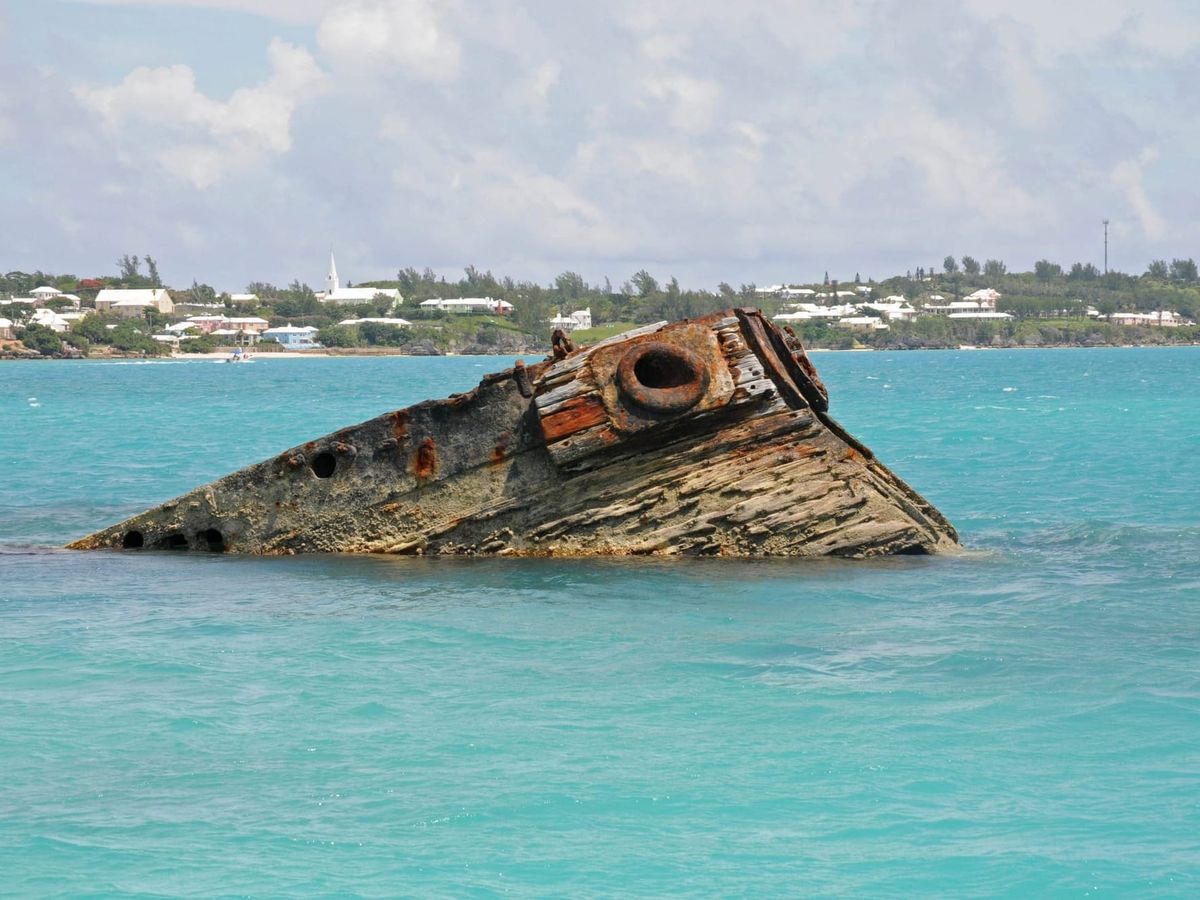
A scientist thinks he has finally solved the Bermuda Triangle mystery and the answer doesn’t involve aliens. The theory centers on a giant underwater volcano. According to mineral prospector Nick Hutchings, Bermuda is actually the exposed top of an ancient underwater volcano. And hidden within that volcanic structure is magnetite, one of the most magnetic naturally occurring materials on Earth.
Hutchings believes deposits of magnetite may have interfered with ships' and aircraft's navigation systems, causing them to lose their bearings in one of the busiest stretches of ocean on the planet. To demonstrate the concept, he reportedly placed a piece of magnetite beneath a compass and watched the needle spin wildly.
Why the Bermuda Triangle became famous
The Bermuda Triangle refers to a region in the North Atlantic bounded by Bermuda, Florida, and the Greater Antilles. Over the years, stories about ships and planes disappearing there have become part of modern folklore.
Some of the most famous cases include the disappearance of the USS Cyclops in 1918 and the loss of the SS Cotopaxi in 1925. Then there's the infamous Flight 19 incident in 1945, which cemented the region's spooky reputation.
These incidents and more helped transform the region into one of the world's most enduring mysteries.
Not everyone is convinced
The magnetite theory is getting attention because it offers a natural explanation for something many people assumed was supernatural. But plenty of scientists argue there may not be a mystery to solve in the first place.
According to Karl Kruszelnicki, ships and aircraft don't disappear in the Bermuda Triangle at unusually high rates. His argument is that the area sees enormous amounts of traffic. More ships and planes passing through naturally means more accidents. In percentage terms, he says, the number of incidents isn't significantly different from other heavily traveled parts of the world.
Another explanation focuses on the region itself. The Bermuda Triangle sits in an area known for rapidly changing weather and powerful storms. Oceanographer Simon Boxall has pointed to the possibility of massive rogue waves forming when multiple storm systems collide.
These waves can reach heights of around 100 feet, according to some reports. That is large enough to threaten even major cargo vessels and tankers.
Add strong storms, rough seas, navigation mistakes, and heavy traffic, and the mystery starts looking a lot less mysterious.
Hutchings' magnetite theory offers one possible explanation, but it has not ended the debate. After more than a century of theories, people remain fascinated by the idea that one patch of ocean can inspire so many questions. And that fascination may be the one thing the Bermuda Triangle never loses.
Source: New York Post