Giant dinosaur eggs found where scientists least expected them
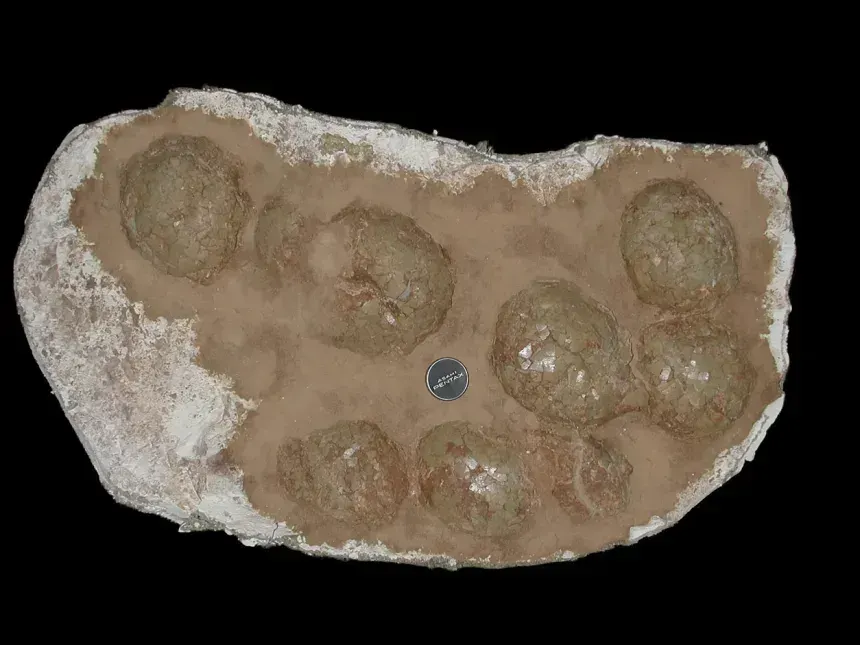
A recent discovery is challenging people to reexamine and learn more about dinosaurs. What makes this discovery especially exciting is that it examines how dinosaurs reproduced in regions far from the equator while still keeping their massive eggs warm.
A treasure trove of Titanosaur eggs found
Unearthed in Argentina, this discovery is being described as a trove of titanosaur eggs. What makes this unusual is that typically, these eggs were found in lower-latitude regions close to the equator.
The warmer temperatures near the equator acted like a natural incubator. So how could the eggs survive at high latitudes or regions far from the equator? It's a question scientists are now examining.
“We know their bones (titanosaur) have turned up in places as far south as Antarctica and southern Argentina, and as far north as Mongolia and Texas,” said Darla Zelenitsky, a paleontologist and associate professor at the University of Calgary in Alberta.
Zelenitsky is a senior author of the new research, published in the journal Royal Society Open Science.
Digging into what they know about titanosaurs
Scientists believe the titanosaur likely traveled long distances and nested in the same place for millennia.
“They clearly spent time in higher latitude areas, but until now it wasn’t known whether they were also nesting there,” said Zelenitsky.
Unlike today's birds, and smaller dinosaur species, scientists think titanosaurs didn't brood their own eggs. Their size would have crushed the eggs. Instead, they think the titanosaurs laid their eggs and then left.
A nest was made to act like an incubator
Like with any egg, the titanosaur eggs would have needed to stay warm to hatch. The eggs were also porous, so they would need to stay humid or damp. The nests are believed to have been the size of a picnic table.
“The most likely scenario is that these titanosaurs laid their eggs in mound nests made of vegetation and soil, where incubation heat came mostly from rotting plant material,” said Zelenitsky.
Still so much to learn
It is incredible to think that as much as we've learned about dinosaurs, we are probably still just scratching the surface.
Source: CNN