Archaeologists find 2,000-year-old site matching Jesus' tomb

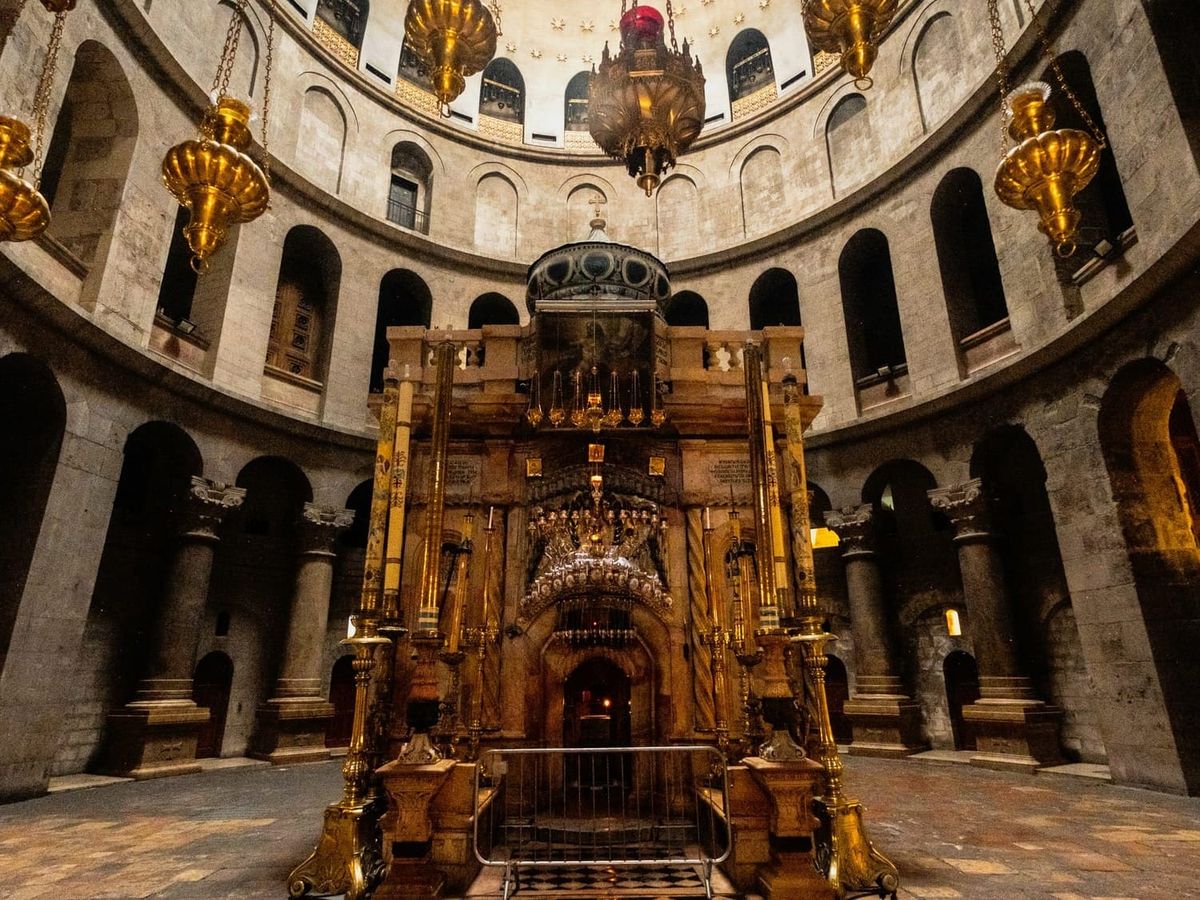
What if one of Christianity’s most famous holy sites just gave archaeologists a little more to work with? Italian archaeologists excavating beneath Jerusalem’s Church of the Holy Sepulchre say they have uncovered an ancient funerary landscape that remarkably lines up with the biblical description of where Jesus was buried.
No, they did not find Jesus’ remains. And no, archaeologists are not declaring the case closed. But they did find an ancient quarry, rock-cut tombs, cultivated land, olive trees, and grapevines all sitting beneath one of Christianity’s most important pilgrimage sites.
The findings come from a preliminary study published in the archaeological journal Liber Annuus.
The Bible described a garden. Archaeologists found one.
The discovery gets interesting because of how closely the landscape appears to match the Gospel accounts. John 19:41 describes Jesus’ burial place this way: there was a garden near the place of crucifixion, with a new tomb in which no one had yet been buried.
Under the Church of the Holy Sepulchre, researchers found what appears to have been an ancient agricultural landscape carved into and surrounding a quarry. There were cultivated plots, olive trees, and grapevines, alongside stone-cut tombs.
The tombs made the archaeological puzzle look more familiar
The researchers also uncovered graves carved directly into the rock. Remember that the Gospels of Matthew, Mark and Luke describe Jesus' tomb as having been carved from rock.
The location itself also fits some of the geographical clues in the Bible. The Gospel of John places the crucifixion near Jerusalem, while Hebrews describes it as taking place outside the city gate. At the time of Jesus, researchers say the quarry would have been outside Jerusalem's walls.
The plants are another clue
Among the discoveries were traces of olive trees and grapevines dating to roughly the period when Jesus is believed to have died, around 33 A.D. The quarry also contained sections that were around 20 feet deep and had been filled with soil, suggesting that parts of the area had been transformed for agricultural use.
That gives archaeologists something more tangible than simply saying, "This place looks like the Bible." They have evidence that the landscape actually contained the kind of cultivated garden described in the Gospel account.
But nobody found Jesus
The discovery does not prove that Jesus was buried there. There were no remains identified as Jesus, and archaeology can't simply slap a "case closed" sticker on a site just because several details match an ancient text.
What the findings do show is that the landscape beneath the Church of the Holy Sepulchre was consistent with the kind of burial environment described in the Gospel accounts. And there's another intriguing piece of the puzzle.
Someone went out of their way to preserve the tomb
One chamber discovered by the archaeologists had been blocked by a Roman structure built during the reign of Emperor Hadrian in the second century. Roughly 200 years later, workers associated with Constantine's building project destroyed that Roman structure and exposed the tomb again. The tomb was then separated from the surrounding chambers and given its own Christian shrine.
That sequence is particularly interesting because it suggests early Christians were deliberately identifying and preserving that particular spot. This indicates that the location had become important to Christian worshippers relatively early in the site's history.
Four million pilgrims already come here every year
The Church of the Holy Sepulchre is one of Christianity's most important holy places, and around four million people visit it each year. The current church dates to the fourth century and was built over a site that Christians have traditionally identified with Jesus' crucifixion, burial and resurrection.
The new archaeological findings add another layer to that story. Lead archaeologist Francesca Romana Stasolla says the real significance isn't necessarily proving the identity of the tomb, but understanding the generations of people who believed this was the place where Jesus was buried and built their faith around it.
Because whether you approach the site as a believer, a historian or someone who just enjoys an exceptionally good archaeological mystery, there's something remarkable about uncovering the physical landscape that people were worshipping around nearly 2,000 years ago. The tomb may still be a question mark. But the history surrounding it is very real.
Source: New York Post