Trump mobile phones finally launch to intense buyer backlash

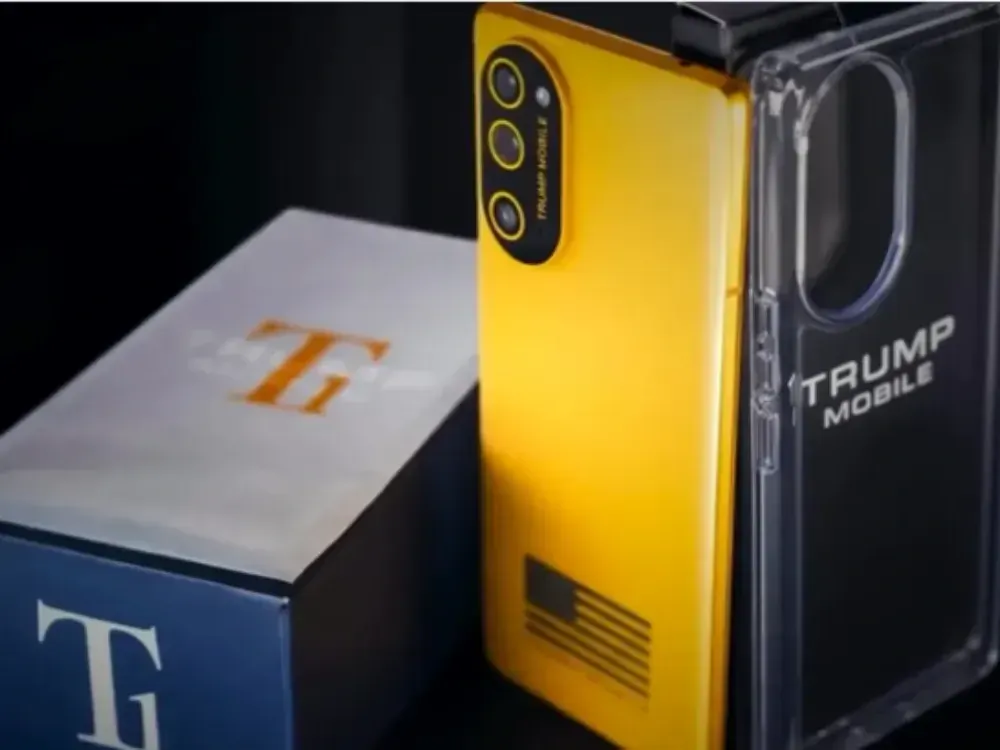
After months of delays and hype, the Trump Mobile T1 phone has officially started shipping.
But instead of a smooth launch, early buyers and online reactions are focusing on what the phone actually is and what it isn’t. Let’s walk through what people are saying.
The promise of an “America First” phone vs. the reality
The T1 phone was originally pitched as a bold alternative to mainstream smartphones. It was supposed to be an all-American device with a gold finish and American flag branding that would go for $499. Furthermore, it was marketed as "built in the United States."
The phone was positioned directly against Apple and Samsung, both of which manufacture phones overseas. And a lot of people bought into the patriotic branding. Hundreds of thousands actually put down deposits to pre-order.
But somewhere between announcement and launch, the messaging shifted. Instead of “Made in America,” the site now describes it as “Shaped by American innovation.” That’s a noticeable downgrade from the original promise, and it did not go unnoticed.
The design and the “Made in America” issue
One of the first things people pointed out online is that the American flag on the phone has 11 stripes. The actual U.S. flag has 13 stripes representing the original U.S. colonies.
For a product built around patriotic identity, that detail was a huge miss, and it quickly became one of the most shared criticisms across social media.
Another big sticking point is the manufacturing origin. Based on the hardware similarities, analysts say the phone was likely produced in China or Taiwan. That directly clashes with the original “American-made” positioning. And while Eric Trump has said the goal is for future versions to be built in the U.S., that’s not where things stand today and people are so not having that.
Hardware and software concerns are adding to the backlash
Early reports from tech analysts and reviewers suggest the T1 phone may not actually be a brand-new device at all. Instead, it appears to closely resemble existing Android phones, like models from HTC or other manufacturers, with a custom gold casing and branding added.
Reported specs include a mid-range Snapdragon 7 chip and a standard camera setup, which puts it firmly in the mid-tier smartphone category, not premium.
That’s where questions started stacking up from “why is it priced at $499?” to “is this just a rebranded device?” and “where was it actually made?” Because similar devices sell for much less.
The software choices also had tongues wagging, as the phone comes with Truth Social, the social app founded and owned by Trump, preinstalled. That’s not unusual on its own. After all, most phones ship with default apps. However, it stripped away neutrality from the phone and made it feel politically branded. Issues people had with this vary from privacy and data concerns to wondering whether the phone was about technology at all or about identity and messaging.
The delays did not help
Even before the rollout of the phone, there was controversy brewing, as it was originally expected in late 2025 but ended up shipping roughly nine months later.
At one point, preorder terms even included language saying release wasn’t guaranteed, timelines weren’t guaranteed, and delivery wasn’t guaranteed. Really not what most people expect after putting down money for a device sold to them as “America First.”
Even the launch wasn’t clean. When Trump Mobile announced the phone was shipping, a promo video posted online was flagged by users for inconsistencies, including the same flag issue and irregular design details.
Again, not the kind of rollout you want after a nine-month delay.
Social media reaction to all of these issues has been loud. And right now, the conversation is not even about the phone’s performance and features but about whether it actually matched what people thought they were buying.
Source: Newsweek