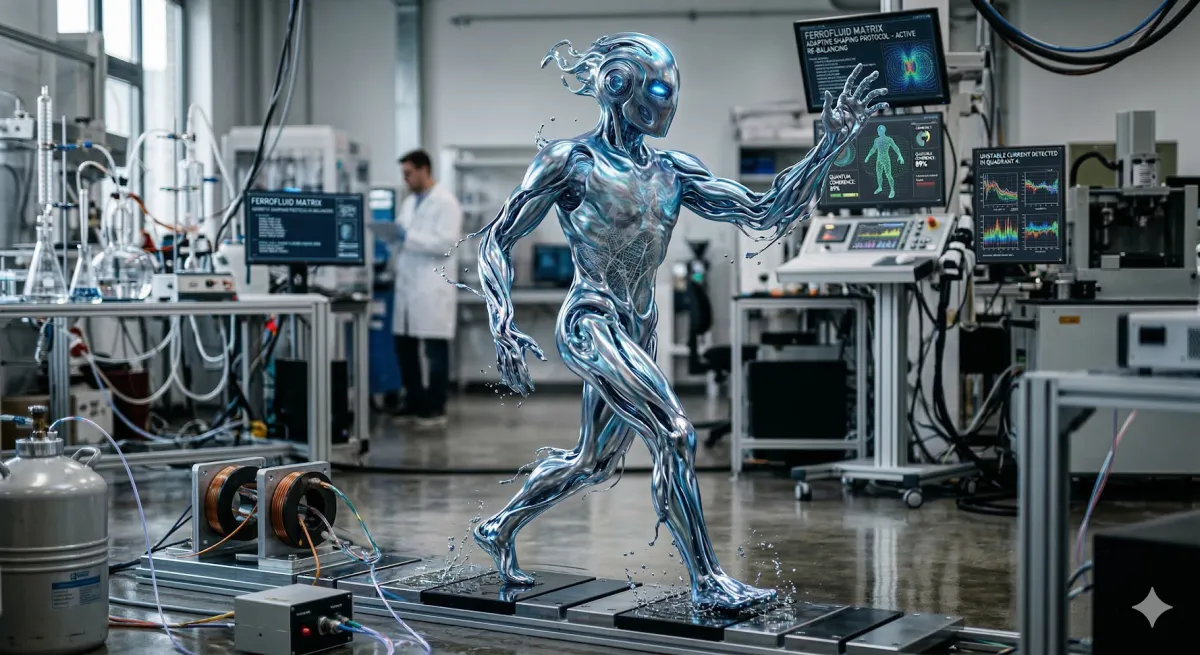
Scientists develop a robot capable of moving like a liquid

Imagine watching a robot walk onto a stage, and your first thought is, “Wait, is that actually a person?” That’s basically what happened when China's Xpeng unveiled its new humanoid robot, IRON. It looked so lifelike and moved so fluidly that it took the company literally cutting it open onstage to prove there wasn’t a human hiding inside.
Most robots still move in that familiar stiff, animatronic way. You know the vibe: jerky steps, robotic arms, zero swagger. IRON isn’t that. This humanoid bot was designed to move fluidly, with a flexible spine, artificial muscles, and joints that let it bend, pivot, and gesture with surprising smoothness.
All about the robot that doesn’t move like a robot
What makes IRON especially interesting is how it was built. Instead of starting with a machine and layering on human-like features, Xpeng says it designed the robot from the inside out. Closer to how a body actually works. There’s an internal skeleton, bionic muscle structures, and a full synthetic outer layer meant to feel more natural than the cold metal-and-plastic robots we’re used to.
The company even hinted at future customization… different body types, genders, appearances, maybe even stylistic choices. Which is… a sentence that would’ve sounded absurd years ago.
Underneath all that smooth movement is a serious AI engine. IRON runs on three custom AI chips delivering a combined 2,250 trillion operations per second. That’s wildly higher than most consumer hardware, and it shows in how the robot processes the world.
Instead of translating what it sees into language first (like many AI systems do), it can interpret what it sees and react physically.
There’s also a subtle but important hardware detail: the battery. IRON uses a solid-state battery instead of a traditional lithium-ion pack. That means fewer flammable components. Because yes, the plan is for people to actually be around these things.
Don’t expect a robot roommate just yet
Before you imagine a robot folding your laundry, Xpeng is pumping the brakes a bit. The company says IRON won’t be operated in homes in the immediate future, as there are safety risks written all over the combination of these creations and homes.
Instead, the first wave will show up in controlled environments like offices, showrooms, and retail stores. So, think reception desks and brand showcases but expect a debut as early as this year.
Source: Live Science