New evidence suggests earth is trapped in a void 2 billion light-years wide

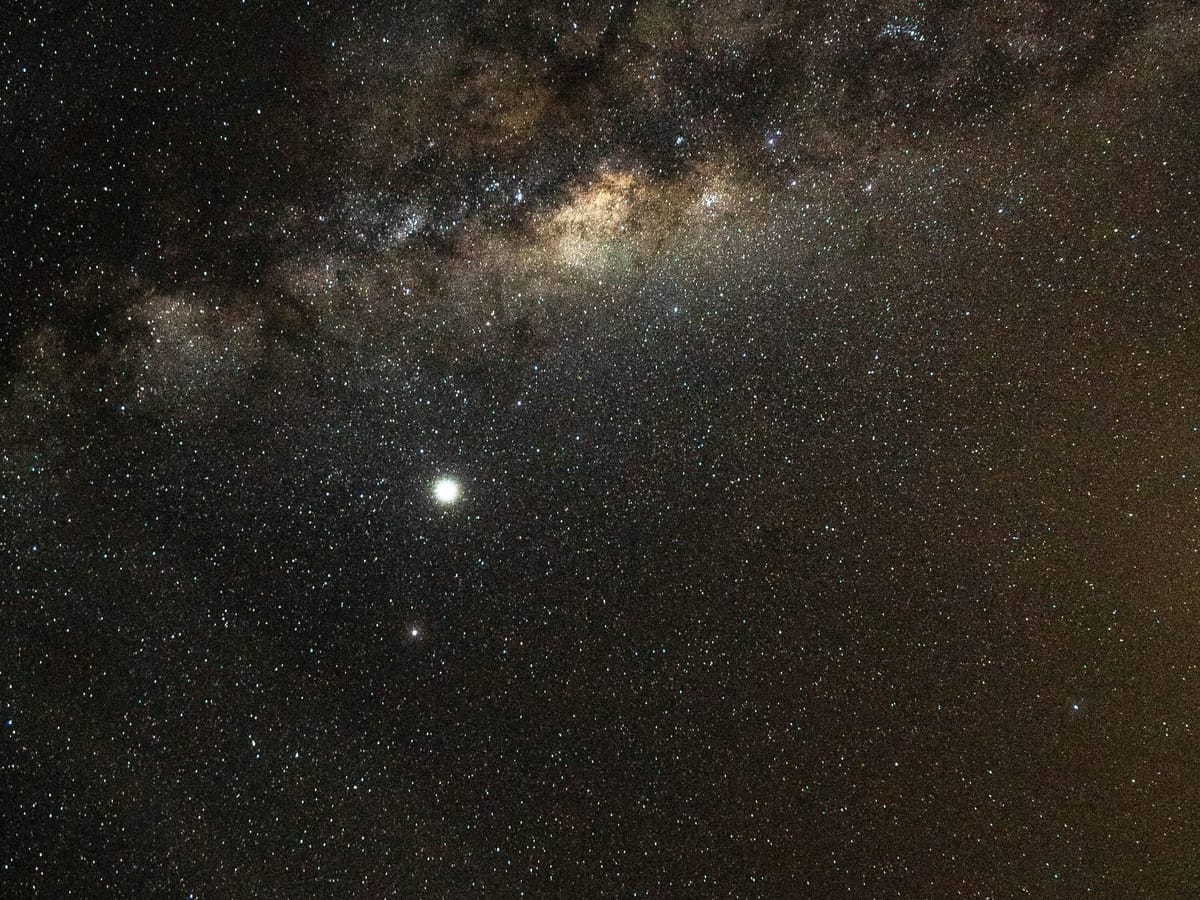
Imagine finding out your entire galaxy lives in the universe’s version of a quiet, empty neighborhood. That’s what’s about to happen.
For years, scientists have been stuck on a frustrating problem: the universe seems to expand at one speed far away… and a completely different speed nearby. It’s called the Hubble tension, and it’s been quietly breaking brains in cosmology.
Now there is a new idea that flips everything on its head. What if nothing is wrong with the universe and earth is sitting in the middle of a massive cosmic “nothing zone”?
We might be floating in a massive cosmic “empty zone”
Researchers now think the Milky Way could be inside a giant underpopulated region of space. A void stretching over 2 billion light-years.
To put that in perspective, that is so big it makes “middle of nowhere” feel like an understatement.
It is not empty empty, but it is noticeably less crowded. It’s like finding your entire city is actually built inside a massive quiet patch where everything is spaced out more than usual. Or showing up to a party that was supposed to be packed, but you’re really one of five people there.
This could explain a long-standing space problem
Basically, whenever scientists tried to measure how fast the universe is expanding, the numbers did not agree. They kept getting conflicting answers depending on how they ran the measurements.
That’s the Hubble tension. But no one could really explain why. And it was one of the biggest headaches in cosmology.
Most explanations tried to rewrite physics or rethink dark energy. But according to this new theory, the measurements look off because we’re measuring from inside a cosmic low-density bubble.
If we’re inside a low-density region, it changes how things move around us. Matter slowly drifts toward denser parts of the universe, making our local space look like it’s expanding faster.
So it’s not that the universe is behaving differently. It’s more like we’re watching it from a very specific and very strange vantage point.
This idea isn’t new, but now, it’s harder to ignore
Astronomers have been side-eyeing this possibility for years. There is even a name for the suspected region: the KBC void, which is basically a patch of space where there are fewer galaxies than expected.
What is different now is the data. Researchers looked at ancient ripples from the Big Bang (yes, those still exist in measurable form) and used them like a ruler to track how space has expanded over billions of years.
Their conclusion is that it is about 100 times more likely that we’re inside a void than in a normal, evenly filled part of the universe.
This also builds on earlier observations of the KBC void, a region astronomers have been studying for years due to its unusually low number of galaxies.
Earth is not average after all
For a long time, scientists assumed matter in the universe is spread out fairly evenly.
This idea challenges that.
If we really are near the center of a massive underdense region, it means our “local view” of the universe is slightly skewed. And that skew could be exactly why expansion looks faster from here than it does elsewhere.
While that does not rewrite physics, it does change the perspective. And let’s face it: landing one of the most unusual spots the universe has to offer is absolutely giving main character energy.
Sources: Science Focus, VICE